Free Preschool Math Worksheets to Print

Preschool math worksheets focus on helping children recognize numbers, count objects, identify shapes, and work with simple patterns. Before kindergarten, children practice foundational number skills that support later addition, subtraction, and problem-solving. Structured worksheet practice allows children to focus on one math concept at a time while reinforcing what they are learning through hands-on activities.

These printable preschool math worksheets include counting exercises, number recognition activities, shape identification pages, pattern practice, and simple sorting tasks. Each worksheet focuses on a clear objective such as recognizing numbers 1–10, counting groups of objects, tracing numerals, or identifying basic shapes. Short practice sessions help children repeat skills without becoming overwhelmed.

Teachers can use these worksheets for math centers, small group instruction, or morning work. Parents can include them in short daily practice sessions at home to reinforce counting and number recognition. The worksheets below are organized by skill so you can quickly choose activities that match your child’s current level.

Preschool Math Skills Covered

Counting and Number Recognition

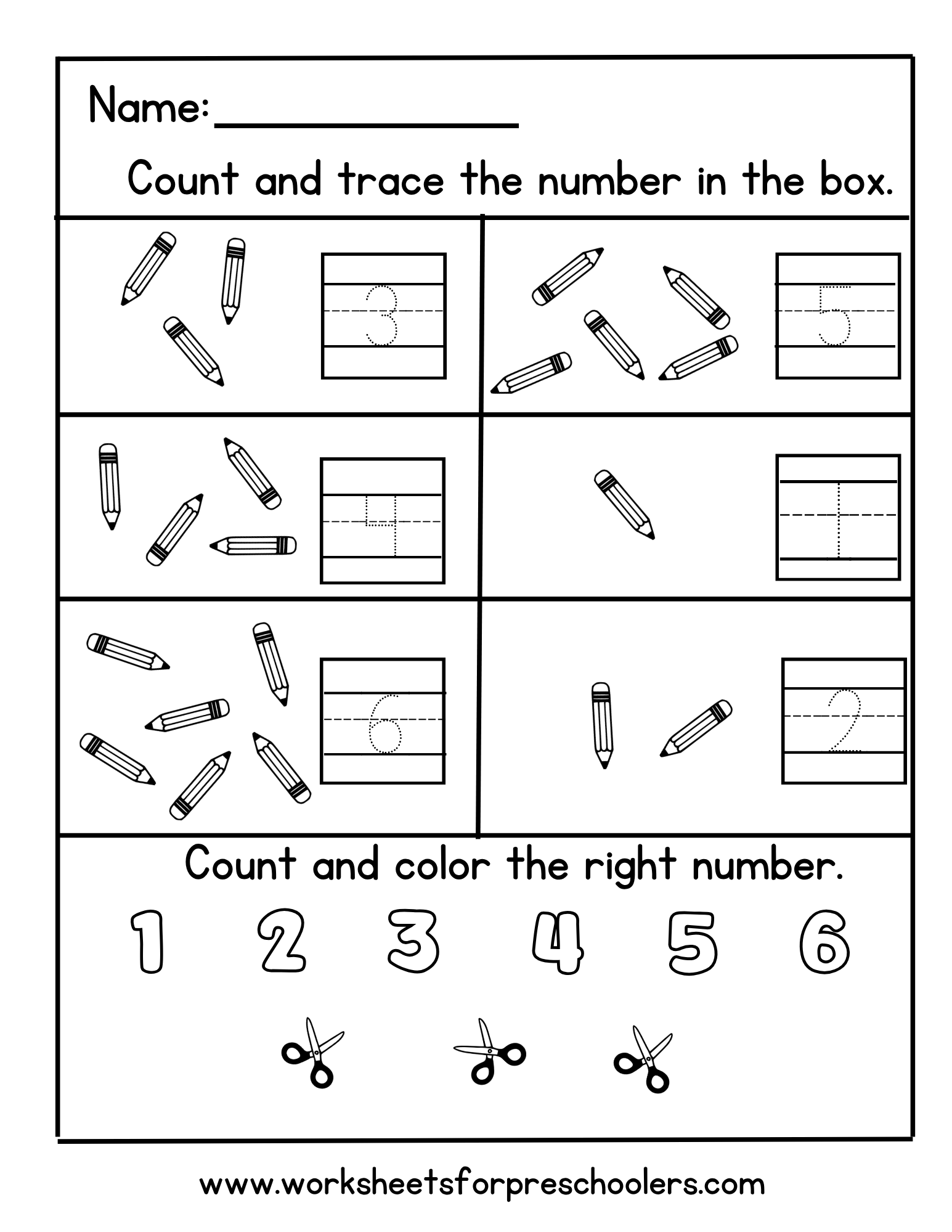
Counting and number recognition worksheets focus on helping preschool children identify numbers and match them to quantities. These activities allow practice with counting objects one by one, recognizing numerals, and connecting numbers to groups of items. Repeated exposure to numbers 1–10, and later 1–20, helps children recognize numerals quickly and understand that numbers represent specific amounts.

Worksheets in this section include counting pictures, circling the correct number, matching numbers to sets, and filling in missing numbers in simple sequences. Some activities focus on counting forward, while others introduce counting backward from smaller number ranges. Children also practice identifying numbers in different formats, such as number words and numerals.

Teachers can use these worksheets during short practice sessions, math centers, or small group instruction. Pairing the worksheet with physical counters, blocks, or small objects allows children to count concrete items before marking their answers on the page.

Count and color birds worksheet

Browse counting worksheets that focus on numbers 1–10, number matching, and simple counting sequences for preschool children

Counting Numbers Worksheets

Shapes and Geometry

Shape worksheets focus on helping preschool children identify, name, and compare basic geometric shapes. Early geometry practice includes recognizing circles, squares, triangles, rectangles, and other common shapes in different sizes and orientations. Repeated exposure helps children identify shapes quickly and understand how they appear in everyday objects.

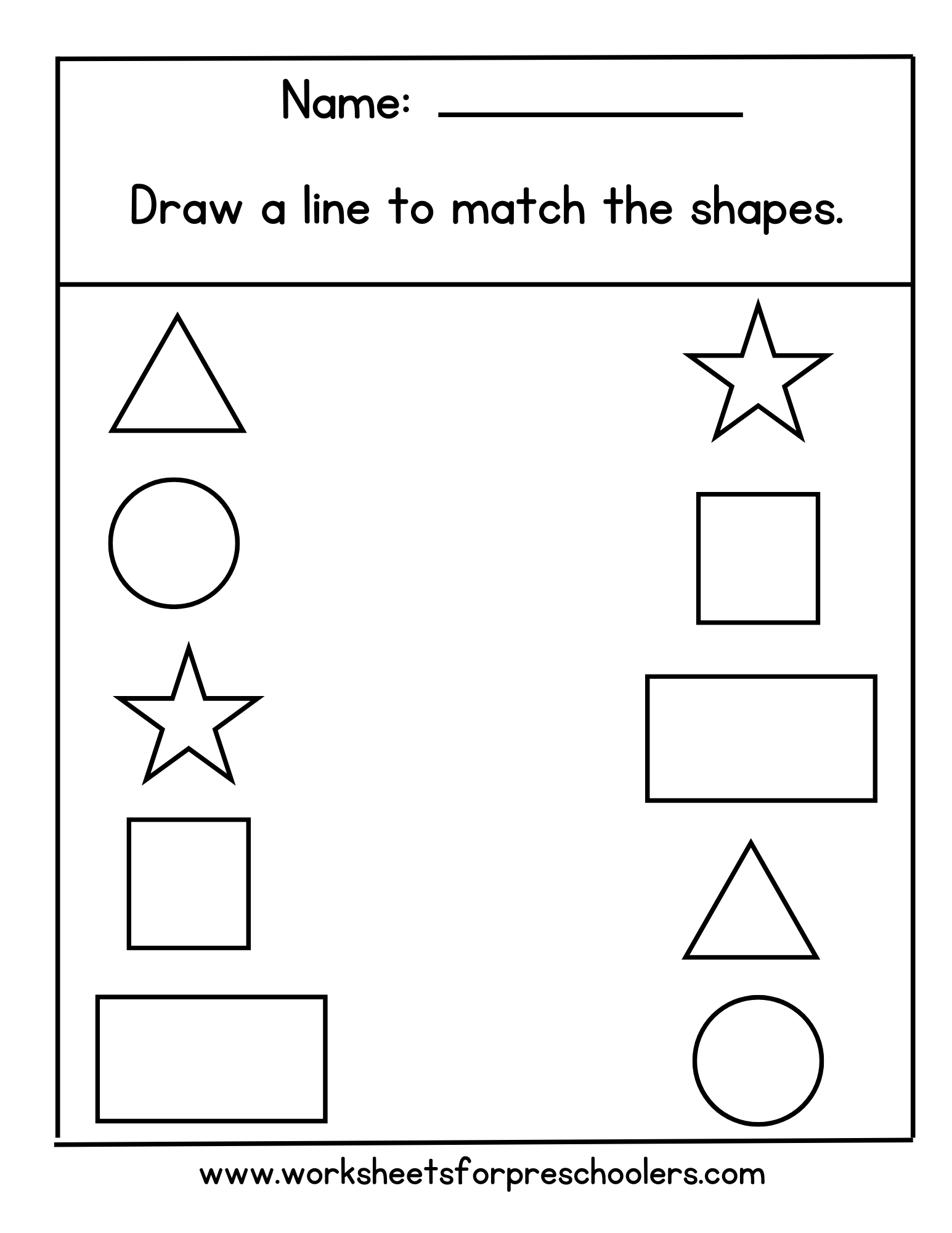
Worksheets in this section include shape matching activities, coloring specific shapes, tracing shape outlines, and sorting objects by shape. Some activities ask children to identify shapes within pictures, while others focus on comparing shapes based on sides and corners. These tasks allow practice with visual discrimination and early classification skills.

Teachers can use shape worksheets during math centers or short practice sessions. Pointing out shapes in the classroom or at home before completing the worksheet helps children connect printed shapes to real-world examples.

Heart Shape Tracing Worksheet

Browse shape worksheets that focus on identifying circles, squares, triangles, rectangles, and simple shape sorting activities for preschool children.

Shapes and Geometry Worksheets

Patterns

Pattern worksheets focus on helping preschool children recognize and continue simple repeating sequences. Early pattern practice usually includes AB, AAB, and ABB patterns using shapes, colors, or pictures. Identifying patterns helps children recognize order, predict what comes next, and organize information visually.

Worksheets in this section include completing repeating patterns, cutting and pasting the correct picture to extend a sequence, and coloring patterns according to a model. Some activities ask children to identify the pattern rule before continuing it. These tasks allow practice with visual comparison and early problem-solving skills.

Teachers can introduce patterns using blocks, beads, or colored objects before moving to the worksheet. Practicing with physical materials first helps children recognize the repeating sequence more easily on paper.

Dinosaur Theme Pattern Completion Worksheet

Browse pattern worksheets that include AB and AAB sequences using shapes, colors, and themed pictures for preschool math practice.

Pattern Completion Worksheets

Sorting and Comparing

Sorting and comparing worksheets focus on helping preschool children group objects based on shared characteristics. Early sorting practice includes organizing items by color, shape, size, or category. Comparing activities introduce concepts such as more and less, bigger and smaller, and same and different.

Worksheets in this section include cut-and-paste sorting tasks, circling the larger group, identifying the smallest object, and grouping pictures by category. These activities allow practice with classification and visual comparison, which are important early math concepts before formal operations.

Teachers can begin with hands-on sorting using blocks, buttons, or classroom objects before completing the worksheet. Physically grouping items helps children understand the comparison concept before marking answers on paper.

Space Theme Count and Circle Worksheet

Browse sorting and comparing worksheets that focus on grouping objects, identifying more or less, and recognizing size differences.

Sorting and Comparing Worksheets

Number Tracing

Number tracing worksheets focus on helping preschool children practice writing numerals with correct formation. Tracing activities allow practice with controlled pencil movements while reinforcing number recognition. Repeated tracing of numbers 0–10, and later 0–20, helps children remember numeral shapes and associate them with quantity.

Worksheets in this section include tracing dotted numerals, writing numbers independently after tracing, and matching traced numbers to groups of objects. Some pages combine counting and tracing so children count a set before writing the corresponding numeral. These activities allow practice with both number recognition and pencil control.

Teachers can model correct number formation before children begin tracing. Short, repeated practice sessions are more effective than long writing sessions, especially for preschool children who are still developing hand strength and coordination.

ColorByNumber4-large

Browse number tracing worksheets that focus on writing numerals 0–10 and connecting numbers to counted groups.

Number Tracing Worksheets

Preschool Math Worksheets by Theme

Theme-based math worksheets allow preschool children to practice counting, number recognition, shapes, and patterns while working with familiar seasonal or topic-based pictures. Using consistent themes helps reinforce vocabulary while allowing repeated math practice with different visuals.

Math worksheets are organized by seasonal themes, animal topics, and general learning units. For example, children may practice counting objects in a winter theme, complete shape activities using animal pictures, or work on pattern sequences within a holiday set. The math skill remains the same, but the theme changes to provide additional repetition without using identical worksheets.

Teachers can choose a theme that matches a weekly lesson plan or classroom unit and select math activities that align with current instruction. This approach keeps math practice structured while connecting it to a broader topic.

Spring Find and Color Number 5 Worksheet

Browse spring-themed math worksheets that focus on counting, number recognition, and pattern practice.

Spring Math Worksheets

Dinosaur Number 3 Math Worksheet

Browse dinosaur-themed math worksheets that focus on counting, number recognition, and pattern practice.

Dinosaur Math Worksheets

Count & Write Numbers Worksheet

Browse winter-themed math worksheets that focus on counting, number recognition, and pattern practice.

Winter Math Worksheets

Arctic Theme Math Worksheet

Browse arctic animals-themed math worksheets that focus on counting, number recognition, and pattern practice.

Arctic Math Worksheets

Preschool Math Worksheets by Age

Preschool math practice should match a child’s current number knowledge and attention span. Some preschool children are just beginning to count objects, while others are ready to recognize numerals to 20 and complete simple pattern sequences. Choosing worksheets based on skill level allows children to practice math concepts at an appropriate pace.

Math Worksheets for 3-Year-Olds

Math worksheets for 3-year-olds focus on counting small groups (1–5), identifying basic shapes, and recognizing simple size differences such as big and small. Activities at this level include counting pictures, matching identical shapes, and sorting objects by color. Short, guided practice sessions work best while children are still developing attention and fine motor control.

Math Worksheets for 4-Year-Olds

Four-year-olds often practice counting to 10 or beyond, recognizing numerals, completing simple AB patterns, and identifying common shapes. Worksheets at this level may include number matching, tracing numerals, and comparing groups using more and less. Many children at this stage are ready for more independent practice with clear visual directions.

Pre-K Math Worksheets

Pre-K math worksheets focus on strengthening number recognition to 20, completing repeating patterns, sorting by multiple attributes, and practicing correct number formation. Activities may combine counting and writing tasks so children connect quantity with numerals. Consistent short practice sessions help prepare children for kindergarten math expectations.

Frequently Asked Questions About Preschool Math Worksheets

What math skills should preschool children learn?

Preschool math focuses on counting objects, recognizing numerals, identifying basic shapes, completing simple patterns, and comparing quantities using more and less. Many children also begin tracing numbers and matching numbers to groups before kindergarten.

How high should preschool children count?

Many preschool children practice counting to 10, and some are ready to count to 20 by the end of Pre-K. Counting with objects first helps children understand that each number represents a specific quantity before moving to written numerals.

Should preschool children use math worksheets every day?

Short practice sessions are more effective than long sessions. Many teachers use math worksheets a few times per week to reinforce counting, number recognition, and shape identification alongside hands-on activities.

How do you teach number recognition to preschool children?

Number recognition can be practiced by pointing out numerals in books, on calendars, and in the environment before completing worksheets. Matching numbers to counted objects and tracing numerals helps children connect number symbols with quantity.

Are worksheets enough to teach preschool math?

Worksheets are most effective when combined with counting real objects, sorting classroom materials, and using manipulatives. Practicing with concrete items first helps children understand math concepts before marking answers on paper.

For additional printable activities beyond math, including literacy, fine motor, and themed worksheets, visit the complete Preschool Worksheets collection organized by subject and age.

Preschool Worksheets

Subscribe to our Newsletter

Receive monthly theme updates, printable worksheets, and coloring pages for preschool and Pre-K. Join the email list to access new literacy, math, and fine motor activities.